


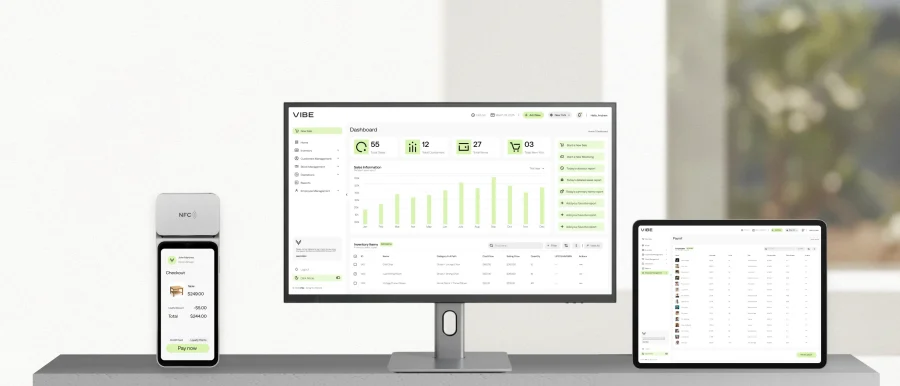
One of the most important choices a modern shop owner in the UK will have to make is choosing the appropriate POS for retail business operations. In the past few years, the way businesses work has changed a lot. Gone are the days of simple cash registers and in their place are digital hubs that handle everything from customer loyalty to stock levels. Finding a good POS for retail business needs to know how software and hardware work together to make the experience smooth for both employees and customers. A strong POS for retail business can make the difference between a struggling business and a successful one in a competitive market by making it more efficient.
The first thing that should be done when looking for a new POS for retail business is to look at what the shop floor needs. POS for retail business that works in a busy grocery store might not work in a small clothes store. It is important to think about how many transactions will happen, how many stock-keeping units will need to be handled, and how detailed sales reports need to be. A full-fledged POS for retail business should do more than just accept payments; it should be the brains of the whole operation, giving real-time information that guides all decisions.
The hardware parts of a POS for retail business serve as the system’s actual interface points. Modern stores in the UK can often pick between fixed terminals and mobile tablet-based sets. For busy counters where speed is important, a fixed POS for retail business device is usually more durable. A mobile POS for retail business, on the other hand, enables staff to assist customers anywhere in the store, cutting down on wait times and providing a more personalised service. No matter what shape it takes, a reliable point-of-sale (POS) system for a store must have important extras like barcode scanners, receipt printers, and safe cash drawers to make sure daily chores are done professionally and quickly.
The most important aspect of any POS for retail business is its software capabilities. Real-time inventory control is something that every serious store must have. A good point-of-sale (POS) system for a store will keep track of inventory levels automatically as things are sold, let you know when you’re running low on products, and even send purchase orders to suppliers. With this level of automation, a POS for retail business avoids the typical pitfalls of overstocking or running out of popular items, which has a direct effect on revenue. A modern point-of-sale (POS) system for a store should also have detailed analytics that let owners see which goods sell the most and when they’re busiest.
Because of the way the economy is in the UK right now, any point-of-sale (POS) system for a store needs to be able to accept a variety of payment methods. At the register, customers now expect to be able to use smart cards, mobile wallets, and even tech that they can wear. To handle these activities quickly and safely, a good point-of-sale (POS) system for a store must be fully integrated with a safe payment processor. Security is very important, and a good point-of-sale (POS) system for a store will follow tight data protection rules to make sure that sensitive customer data and financial data are encrypted. Shop owners can protect themselves from fraud and build trust with their customers by picking a secure point-of-sale (POS) system for their business.
A current point-of-sale (POS) for a store also does a great job with Customer Relationship Management (CRM). POS for retail businesses can help build a thorough database of customers’ buying habits and preferences by collecting information from them at the point of sale. Through their POS for retail business, the store can use this information to make targeted marketing efforts and customer loyalty programs. An integrated point-of-sale (POS) system for a retail business makes it easy to thank customers who come back. For example, you could give them a discount on their birthday or points for every pound they spend. It is a lot easier to build this kind of relationship when the tools are built right into the point-of-sale (POS) system for a store.
Many small business owners don’t think about scalability when they’re first choosing a point-of-sale (POS) system for their store. The technology needs of a business will always get more complicated as it grows. A scalable point-of-sale (POS) system for a store will let you add more machines, more staff accounts, and even support for more than one location. If a store decides to start selling things online, their point-of-sale system should ideally work with their web store. This makes sure that stock levels are correct in both real and online stores, giving the company a clear picture of its progress through a single POS for retail business dashboard.
When a retail business switches to a new point-of-sale (POS), the team usually has to learn how to use it. Like this, the POS for retail business should have an easy-to-use layout. A well-designed point-of-sale (POS) system for a store cuts down on the time needed to train workers and the chance of mistakes happening during busy times. A lot of companies in the UK give free trials or demonstrations of their POS software for retail businesses. This is a great way to see how well the system works for everyday tasks like refunds, discounts, and end-of-day reconciliations. POS for retail business should be seen in motion to make sure it works with the way the shop normally works.
When buying a point-of-sale (POS) system for a retail business, it’s also important to think about ongoing assistance and maintenance. When there is downtime because of technical problems, sales are lost and customers are upset. When picking a point-of-sale (POS) for a store, it’s smart to look into how good the customer service is. Is the POS for retail business service available 24 hours a day, seven days a week in the UK? Are there complete online guides or video lessons that can be found? A trustworthy POS for retail business partner will give you the peace of mind that help is on hand whenever you need it, keeping the system running during busy trading times.
The final thing to think about when choosing a point-of-sale system for a store is the total cost of ownership. Don’t just look at the POS for retail business’s original price; you should also think about how much it will cost you in the long run. Some of these are regular subscription fees, transaction fees from the payment processor, and the cost of replacing or upgrading hardware. A clear pricing scheme for a retail point-of-sale (POS) system helps with budgeting and keeps things from going as planned. It might be tempting to buy the cheapest POS for retail business, but usually the money you spend on a better system pays off in the long run by making your business more efficient and reducing mistakes.
POS systems are becoming more important for stores in 2026, and they are starting to use more advanced technologies like AI and predictive analytics. An AI-enhanced point-of-sale (POS) for a retail business can help stores better predict demand by telling them when to stock up on items before seasonal sales spikes. Because this POS for retail business is designed with the future in mind, the technology will still be useful as the industry changes. Not only does a POS for retail business that is up-to-date help smaller, independent shops compete with bigger national chains, but it also gives them a competitive edge.
To sum up, the best point-of-sale (POS) for a retail business needs to have a mix of useful hardware, smart software, and solid support. A shop owner can choose a point-of-sale (POS) system for their business that really helps it grow by paying attention to key features like product management, payment options, and the ability to add more users. The right point-of-sale (POS) system for a store isn’t just a way to make money; it’s also an investment that will help with management and make the customer experience better. If you take the time to learn about and try out different POS systems for your retail business, you’ll end up with a more organised, profitable, and future-proof business.