


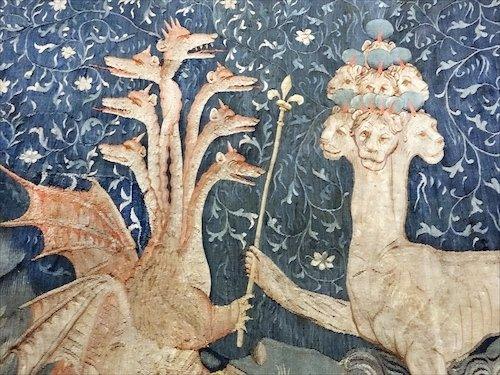
The mysterious symbol revealed in the Book of Revelation, the “mark of the beast,” has fascinated and baffled scholars for generations. Exploring the linguistic, cultural, and historical background of this mysterious notion is necessary to comprehend the mark of the beast meaning in Hebrew. To provide a more nuanced picture of the mark of the beast’s significance in Hebrew, this article delves into the different theories and viewpoints on the subject.
Because the Book of Revelation is so metaphorical, understanding what the Hebrew word for “mark of the beast” means is quite difficult. Because of its use of metaphor and metaphorical language, Revelation should not be taken at face value. Rather, its symbolic meanings allude to more profound spiritual and historical facts. This larger framework of apocalyptic literature is necessary for deciphering the symbolic significance of the mark of the beast in Hebrew.
A further element of difficulty is added to interpreting the mark of the beast by the rich symbolism and richness of the Hebrew language. The original Hebrew words, if any, used in the book of Revelation are lost to us because it was recorded in Greek. Possible meanings of the mark can be better understood, though, by delving into associated Hebrew ideas and customs. As an example, the Hebrew word for “seal” or “mark” can denote several things, including ownership, loyalty, and identification. With this knowledge in hand, we may better decipher the Hebrew meaning of the mark of the beast, which may indicate a type of spiritual devotion or affiliation with the beast.
To fully grasp the Hebrew significance of the mark of the beast, one must also consider the historical setting in which the Book of Revelation was composed. Symbolism in Revelation most likely mirrored the difficulties and fears of the early church’s persecution when the book was written. The mark of the beast, according to some researchers, may have stood for the imperial authority of the Romans or the religion of the emperor, which both sought devotion and threatened the early Christians’ sense of self. The Hebrew text’s historical setting is crucial for deciphering the meaning of the mark of the beast.
Numbers also play a role in the Hebrew interpretation of the mark of the beast. The mark’s linked number, 666, has several possible meanings. In contrast to the heavenly perfection symbolised by the number seven, some academics see it as a sign of imperfection or incompleteness. Some see it as a hidden allusion to a person or thing from history. Mark of the beast interpretation in Hebrew requires knowledge of the meaning of the number 666.
According to some scholars, the Hebrew meaning of the mark of the beast refers to societal and economic dominance. A system of economic control is suggested by the description of the mark as being necessary for buying and selling. Modern worries about data collecting, centralised control over financial activities, and monitoring find resonance in this reading. One way to make sense of modern fears of governmental and economic control is to study the Hebrew meaning of the mark of the beast.
Some have seen the mark of the beast as a metaphor for a moral or spiritual cross-over. In this view, the mark is more symbolic of the readiness to give up one’s principles or ideals for the sake of material prosperity or safety than of any actual physical mark. A deeper understanding of the Hebrew significance of the mark of the beast might prompt introspection on our decision-making process and the possible repercussions of betraying our principles.
Be advised that the Hebrew term for the mark of the beast does not have a single, agreed-upon meaning. Many distinct readings of the Book of Revelation are possible due to its symbolic character, and these readings can shed light on the text from new angles. We may gain a deeper grasp of this mysterious and complicated idea by investigating these different perspectives.
Understanding the Hebrew meaning of the mark of the beast calls for an in-depth analysis of the symbolic language, historical background, and cultural subtleties related to the Book of Revelation. The complexity of this mysterious symbol and its ever-present historical significance might be better understood by considering it from these several angles.