


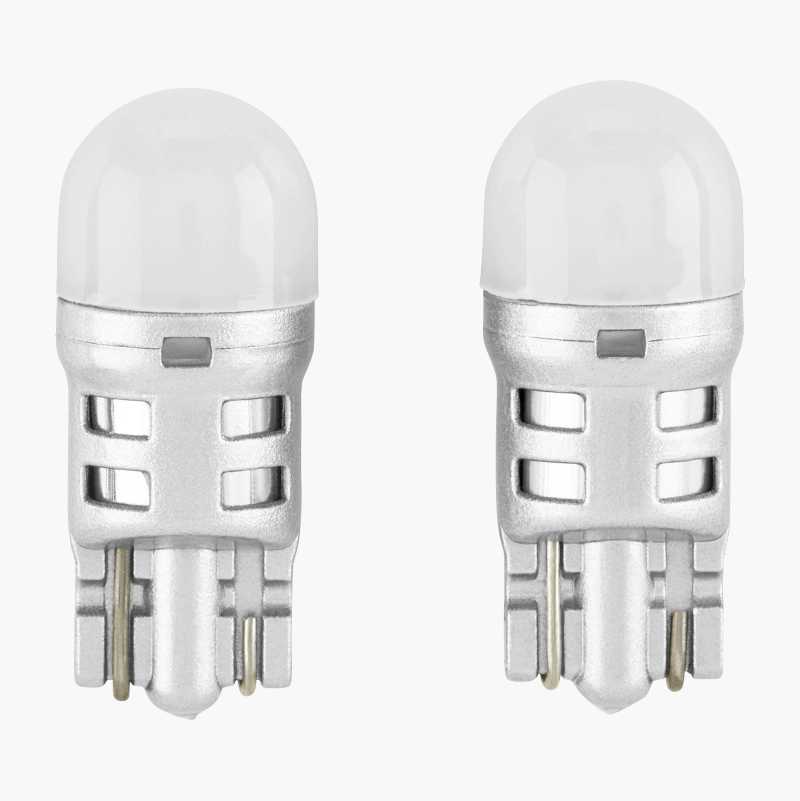
In terms of visibility and communication with other road users as well as general road safety, lighting in cars is absolutely vital. Among the several lights fitted in cars, the W5W bulb is a sometimes disregarded yet necessary part. This little, wedge-based bulb is a multipurpose element fulfilling multiple important lighting purposes: that of ensuring not just road compliance but also the safety and visibility of all traffic users.
Commonly called the wedge bulb because of its unique form, the W5W bulb finds use in several parts of the car. These uses cover parking lights to interior illumination to sidelights. The W5W bulb’s apparently small size conceals its significance; it is absolutely vital for a number of reasons, which this paper fully investigates.
First of all, a vehicle’s vision at twilight, morning, and under bad weather is much enhanced by the W5W bulb. Limited sight typically results in overly strong headlights that cause glare and compromise other drivers’ vision. The softer light produced by the W5W bulb improves vehicle visibility without becoming overbearing. This makes it a suitable choice for parking lights, which are turned on while the primary lights of the car are not in use, and its softer glow provides a method of preserving visibility without dazzling approaching vehicles.
Running as sidelights, the W5W bulb is rather important. Particularly helpful in bad situations or while negotiating close quarters, these lights show the vehicle’s breadth. Law in many countries mandate that each sidelight have a functional W5W bulb as it greatly lowers the possibility of inadvertent swipes or collisions resulting from vehicle size misjudging.
Furthermore, the daytime running lights (DRL) of a vehicle can have the W5W bulb. DRLs are used in many contemporary cars to increase daylight viewability. Although they do not replace headlights in terms of lighting the road ahead, they increase vehicle visibility from a distance, therefore lowering the daytime accident risk. Because of their economy and enough brightness, W5W bulbs are being included into DRL designs by vehicle makers.
Apart from its practical features, the W5W bulb is absolutely essential for following legal criteria. Many areas have traffic rules requiring the usage of particular lighting setups under particular circumstances. For example, Regulation 48 of the United Nations Economic Commission for Europe (UNECE) specifies vehicle illumination regulations throughout Europe. Realising Value of a Working W5W Bulb in Your Vehicle
In terms of car design and safety, every element counts—no matter how minor. This proverb is especially relevant for the little but vital W5W bulb that comprises the lighting system of a car. Parking lights, side marker lights, licence plate lights, and interior illumination are just a few of the many uses for the W5W bulb; it is also a necessary component of the lighting assembly guaranteeing visibility and safety.
The main reason a functional W5W bulb is important is its part guaranteeing visibility. Every source of light on your car determines how well you can see and be seen by others whether you’re negotiating the heavy traffic of an urban sprawl or speeding down a quiet country road after nightfall. Though not as strong as headlights, W5W bulbs greatly increase the general viewability of your automobile. They serve as extra light nodes, defining the size of the vehicle and giving other road users a better view of where your automobile is and any moves you might be intending to do.
Legally and safety-wise, drivers are obliged to have a fully working lighting system including W5W bulbs. Though it seems random, driving with a burnt-out bulb is essentially a wake-up call for possible peril. It’s about preempting hazards, not only about following the rules. Particularly in cases where the primary lights are not employed, a non-functionality of even one W5W bulb might affect the driver’s capacity to indicate actions such turns or stops.
Parking lights are maybe the most important use for one of the W5W bulbs. These lights indicate the presence of a vehicle parked next to a road at night or in bad visibility thereby alerting incoming traffic and so reducing the danger of accidents. Therefore, an operable W5W bulb is absolutely essential, especially in poorly lit locations where a parked car may otherwise create a dangerous obstacle.
Furthermore adding value is the W5W bulb’s convenience advantages. These lights are used in the cabin of the automobile to illuminate different areas, therefore giving passengers access to important interior car features and view. From reading maps to changing the heating settings in the cabin, the W5W bulb is very relevant to general ergonomics and ease. During an emergency, when the many lights of a vehicle—including those run by W5W bulbs—must be employed.
Reducing the importance of these rules not only results in a legal error but also could cause circumstances whereby personal or other safety is jeopardised. Driving without a functional W4W bulb has possible effects on traffic tickets, penalties, or even more serious legal ramifications should one be found to be at fault in a resulting road mishap from insufficient illumination.
One should pay attention to the part these bulbs contribute to a car’s larger lighting plan. Lighting systems are painstakingly crafted by automakers to fulfil a variety of purposes, including legislative compliance, maximum visibility during night driving, and indication of intentions to other drivers. Though not as instantly noticeable as headlights or brake lights, the W5W bulbs in this ecosystem typically act as supplementary illumination sources that are essential for the whole system to run well.
Safety-wise, non-operational W5W lights could cause more than simply limited vision. For instance, other drivers may find it difficult to predict the movements of the signalling automobile if the turn signals of a vehicle are not obviously visible, therefore creating perhaps dangerous conditions on the road. Under such circumstances, a functional W5W bulb clearly serves to guarantee that turn signals are sufficiently bright and quickly grab the attention of other road users.
Often run by W5W bulbs, interior illumination also helps with safety. Imagine looking for a crucial item in your car at night or having to change essential controls in a dark surroundings. A working W5W bulb guarantees that you can complete such chores free from distraction or risk of losing your eyes off the road for too long.
Looking from the visual standpoint, the W5W bulb also enhances the appearance and appeal of a car. Different lighting styles are used by car makers to accentuate the general look of the vehicle or provide a trademark impression. The W5W bulb, even in a minor role in this greater design, helps preserve the intended look, which can be especially crucial for automobile buffs who like the appearance of their vehicles.
Emphasising the requirement of functioning W5W bulbs also are environmental and financial factors. Good lighting helps to save energy, therefore lowering the total power consumption of the vehicle. Drivers may be inclined to utilise substitutes, such as headlights more regularly when W5W bulbs fail, which would result in higher energy consumption and, thus, more regular refueling—adding needless emissions and expenses.
Maintaining the W5W bulbs sufficiently calls for frequent inspections and timely replacements to guarantee best operation. Like other component of a vehicle, these bulbs are prone to wear and strain. Frequent maintenance inspections help to avoid circumstances when a bulb breaks suddenly, thereby perhaps placing you in a less favourable, even dangerous, position on the road. This proactive method guarantees not only safety but also helps to prevent bulb malfunction causing interruption of your driving plans.
Usually easy, installing a W5W bulb should be done carefully to guarantee correctness. Inaccurate installation can cause short circuits, blown fuses, or bulb damage itself—all of which would reduce the bulb’s efficacy and create safety concerns. The secret is to treat the bulb carefully so that it fits securely without using too much force, therefore breaking the fragile filament within.
W5W lamps’ importance even reaches into pedestrian safety. Particularly in congested cities where foot traffic is heavy, cars left incorrectly or without suitable parking lights might endanger pedestrians. For pedestrians, a working W5W light provides important visual signals that help to avoid regrettable interactions.
Moreover, the W5W bulb fits world initiatives to improve road safety. Many worldwide safety campaigns support improved vehicle illumination, often noting the significance of small-scale bulbs like the W5W in lowering traffic injuries and deaths. These initiatives understand that everyone who uses the road bears some responsibility for good illumination; so, having every light in running order substantially enhances the safety.
From negotiating rush hour in an urban maze to seeing beautiful roads at twilight, light bulbs like the flexible W5W are often unsung heroes of our road journeys. Not only by lighting the invisible corners, but also by indicating to others our intents, presence, and even the elegance of our cars, so complementing the main lights of the vehicle. Little guardians that call attention where and most required, they are inconspicuous additions with great ramifications.
Ultimately, the little W5W bulb bears immense responsibility much beyond what its size would indicate. It promotes not just legal adherence but also top road safety. It improves the general performance of the lighting system of the car, increases its visual attractiveness, and is very important for the ergonomics and user-friendliness of the inside of the car. Whether it’s in bad weather, on a clear day, or during the calm late evening, a functional W5W bulb is very vital.